
Why Shoppers Leave: Fixing Your Shopify Checkout Leaks in 2026
Diagnose Shopify checkout drop-off step by step using a leak-detection framework that maps abandonment causes to specific UX fixes for cart, shipping, payment, and review screens.
In this article
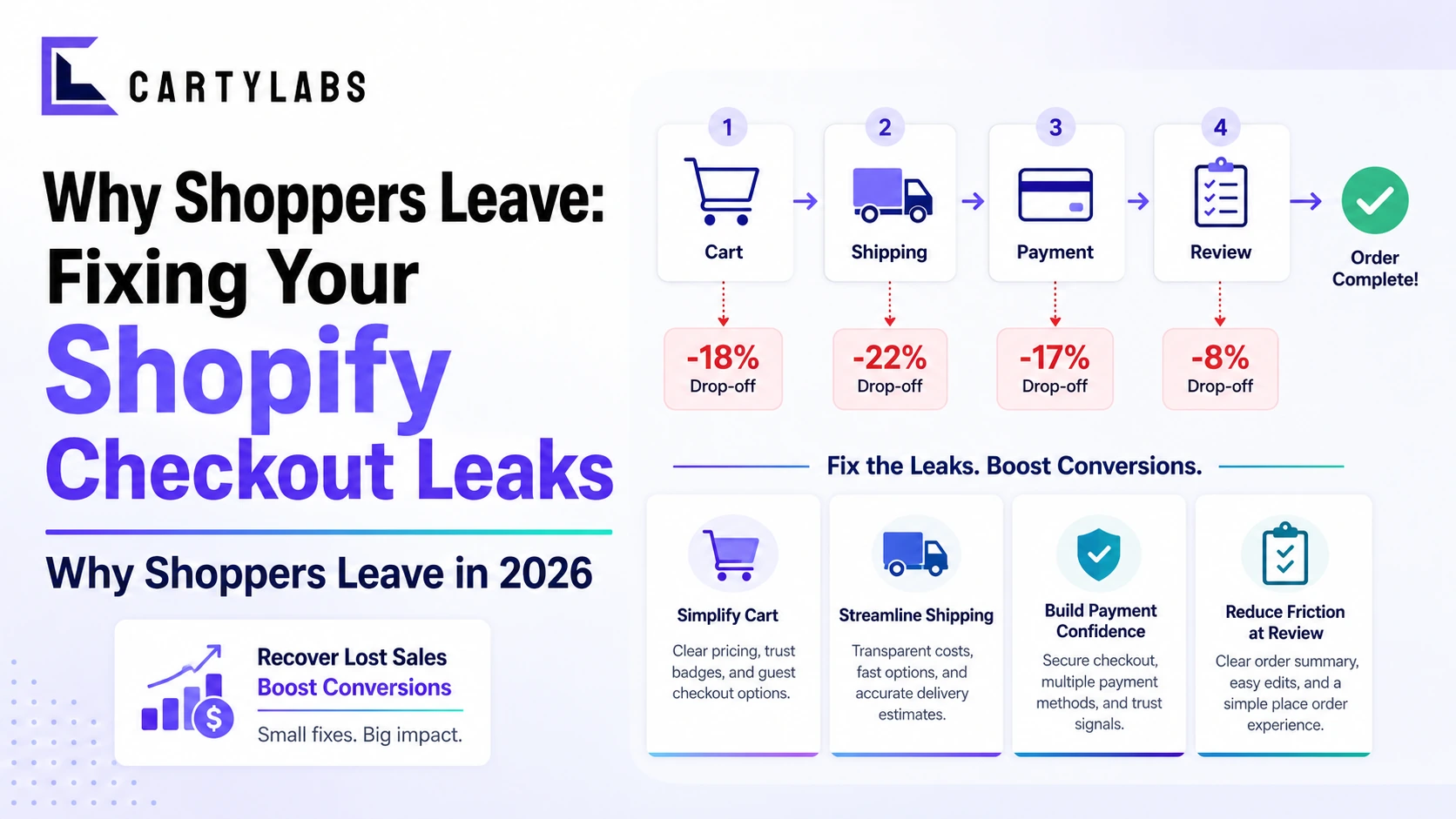
Your checkout has leaks. Every Shopify store does. The question is not whether shoppers are leaving but exactly where they slip out, and why. Treating checkout as a single opaque step is what keeps abandonment rates stuck near seventy percent. Treating it as a five-room house with five different exits is what unlocks ten-point conversion gains.
This guide is a leak-detection framework. We walk through each Shopify checkout step, name the most common reason buyers exit there, and give you the exact fix.
If you want the broader numbers, our Shopify checkout conversion benchmarks post has the median, top decile, and bottom decile rates for each step.
The five-step funnel
Shopify checkout, whether you use one-page or multi-step, breaks into five logical stages:
- Cart review
- Contact and shipping address
- Shipping method
- Payment
- Order review and confirm
Each stage has its own dominant leak. Knowing which one is yours is the entire game.
Leak 1: cart review
Shoppers leave the cart for one of three reasons: shipping cost shock, second-guessing the purchase, or going to a competitor’s tab.
The fix for shock is transparency. Show shipping cost in the cart, not at checkout. Use a free shipping bar at the top of the cart drawer to make threshold progress visible.
The fix for second-guessing is to surface reassurance: return policy, recent reviews, a “satisfaction guaranteed” line. The fix for competitor-shopping is speed, because the faster your cart-to-pay path, the less time the shopper has to wander.
Leak 2: contact and shipping
The drop-off here is almost always about field count. Every required field that is not absolutely necessary loses about one percent of buyers. Phone number, company name, address line two, and “create account” checkboxes are the worst offenders.
Audit your contact form. Cut any field your fulfillment process does not actually need. Mark the remainder clearly. Use browser autocomplete attributes on every field so mobile autofill works. See the form-design section of our Shopify checkout UX best practices for the full pattern list.
Leak 3: shipping method
The leak here is usually price surprise. The shopper expected free shipping or a low flat rate and found neither.
Two fixes: first, make at least one shipping option feel cheap relative to expectation. “Standard, $4.95, arrives Tuesday” reads better than “Standard, $4.95, three to five business days.” Second, use the cart and product pages to set expectations so this screen confirms rather than reveals.
Leak 4: payment
Most payment-step abandonment is trust, not preference. The buyer is not refusing to use a credit card; they are refusing to use yours. Strong trust signals at this step matter more than anywhere else in the funnel.
Place SSL and payment-logo badges inline with the form, not banner-style. Surface a single short customer testimonial. Branded checkout (custom fonts, brand color) lifts payment-step completion noticeably on smaller brands. The deep dive is our Shopify checkout trust badges guide.
Express checkout buttons (Shop Pay, Apple Pay, Google Pay) also belong above the form, since they let buyers skip the trust evaluation entirely.
Leak 5: order review and confirm
By the time a buyer reaches review, they have committed. Drop-off here is rare but costly. The two killers are: surprise totals (tax or shipping that did not appear earlier) and a slow confirm button.
Fix surprise totals by showing every line item, every fee, and the running total throughout the entire checkout. Fix slow buttons by removing every script that fires on click. Each three hundred milliseconds of latency at this step costs about half a percent of completion.
A weekly leak audit
Once a week, open analytics and pull checkout funnel completion rates per step. The step with the largest gap to the next is your active leak. Fix one leak per week. In two months you have plugged every gap and your overall completion rate compounds.
For the cart, free shipping bar, in-cart upsells, and trust signals, Cartylabs plugs the first two leaks (cart review and payment trust) without code. The shipping, address, and review fixes need a checkout customization (Shopify Plus) or the standard checkout settings, depending on your plan.
Related reading: How transparent shipping fees save conversions.
Next steps
Related Shopify resources
Practical tools and product pages related to this guide.
Keep reading
All articles →
Guest Checkout vs. Account Creation on Shopify: Which Wins in 2026?
Should you force account creation or offer guest checkout on Shopify? Data-backed comparison of conversion, retention, LTV, and the hybrid post-purchase signup pattern that beats both.
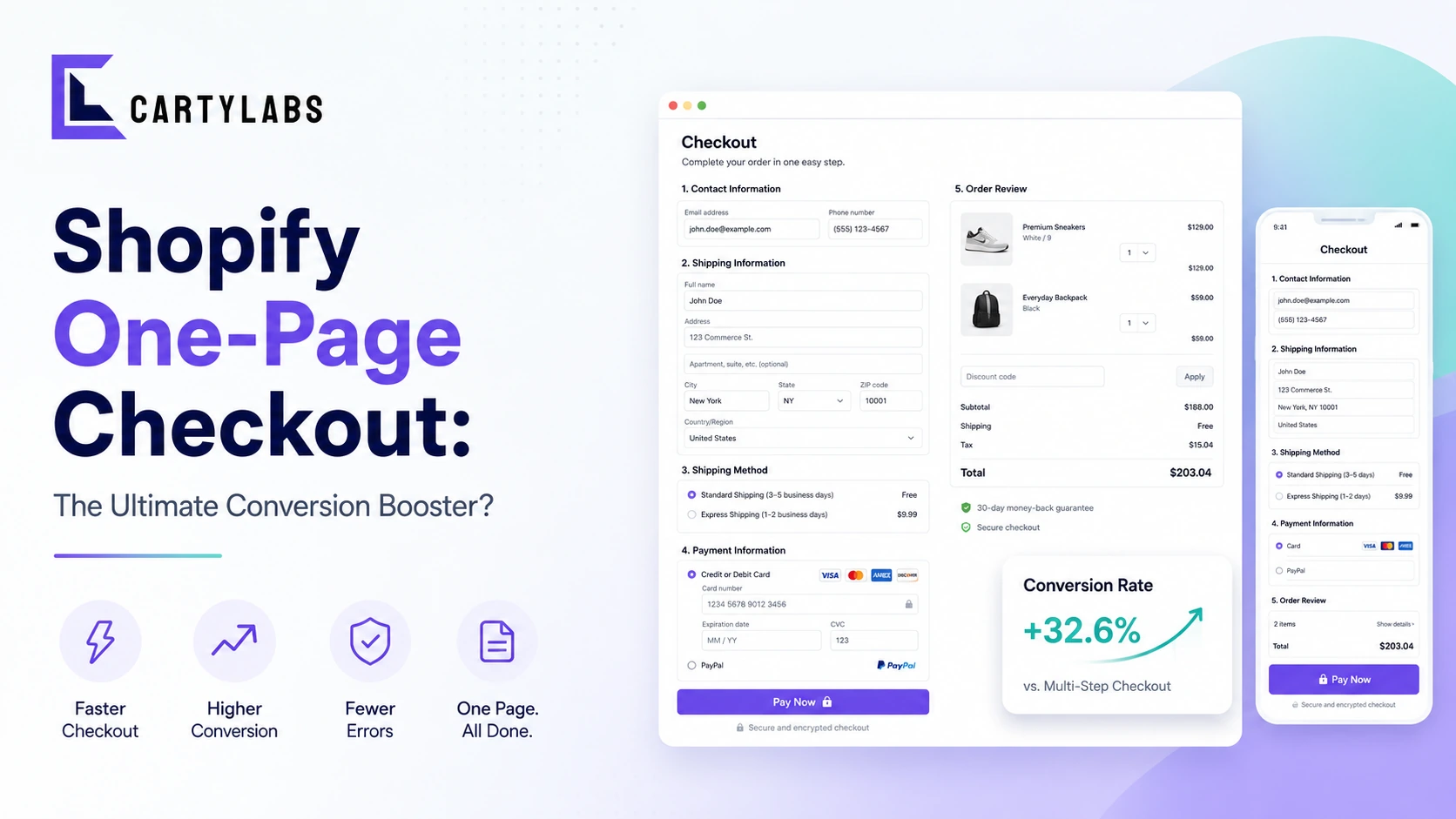
Shopify One-Page Checkout: The Ultimate Conversion Booster?
Does Shopify one-page checkout actually beat multi-step in 2026? A data-backed look at conversion gains, mobile trade-offs, and exactly when to switch your store.
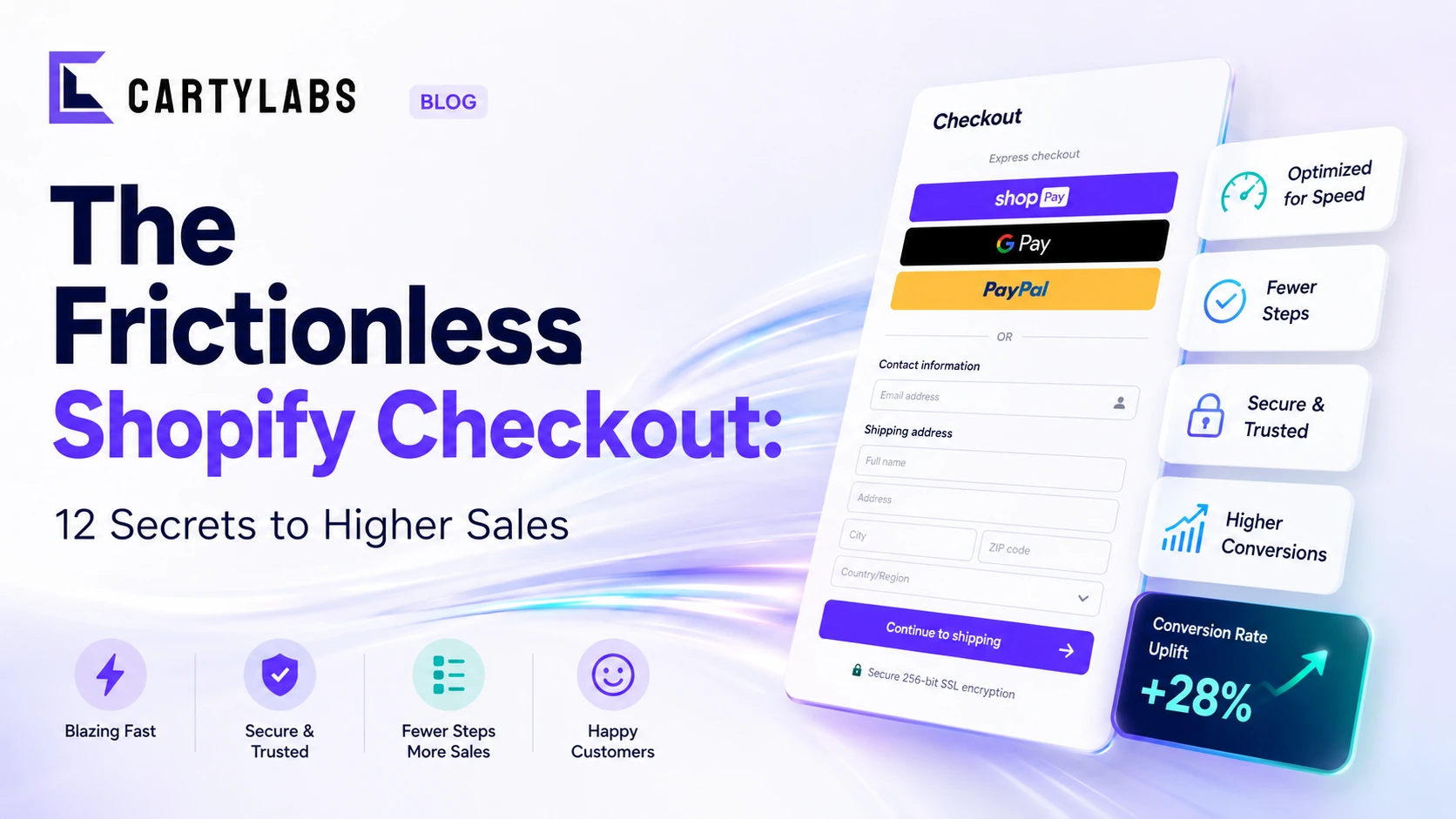
The Frictionless Shopify Checkout: 12 Secrets to Higher Sales
Build a frictionless Shopify checkout with twelve advanced tactics across form design, payment surfacing, dynamic shipping, and intelligent default selection that quietly compound conversion.
 Install Cart — Free